The Essential Guide to Mining Hardware for Cryptocurrency
As the cryptocurrency market continues to evolve, so does the need for efficient and powerful mining hardware. With billions of dollars at stake and increasing competition, choosing the right mining hardware can make a significant difference in your profitability. In this article, we’ll explore the various types of mining hardware available, how to choose the right one for your needs, and the future trends in mining technology.
What is Mining Hardware?
Mining hardware refers to the physical devices used to mine cryptocurrencies, validate transactions, and secure blockchain networks. Typically, mining involves solving complex mathematical problems to add transaction records to the blockchain. The first miner to solve these problems gets to add a new block and is rewarded with cryptocurrency. Over the years, mining has evolved from CPU mining to using advanced ASIC miners, which provide higher hashing power and efficiency.
Types of Mining Hardware
1. Central Processing Units (CPUs)
Initially, mining was performed using standard CPUs found in personal computers. However, as the difficulty of mining increased, CPUs became less efficient. While still used for some types of mining, CPUs are not practical for major cryptocurrencies like Bitcoin.
2. Graphics Processing Units (GPUs)
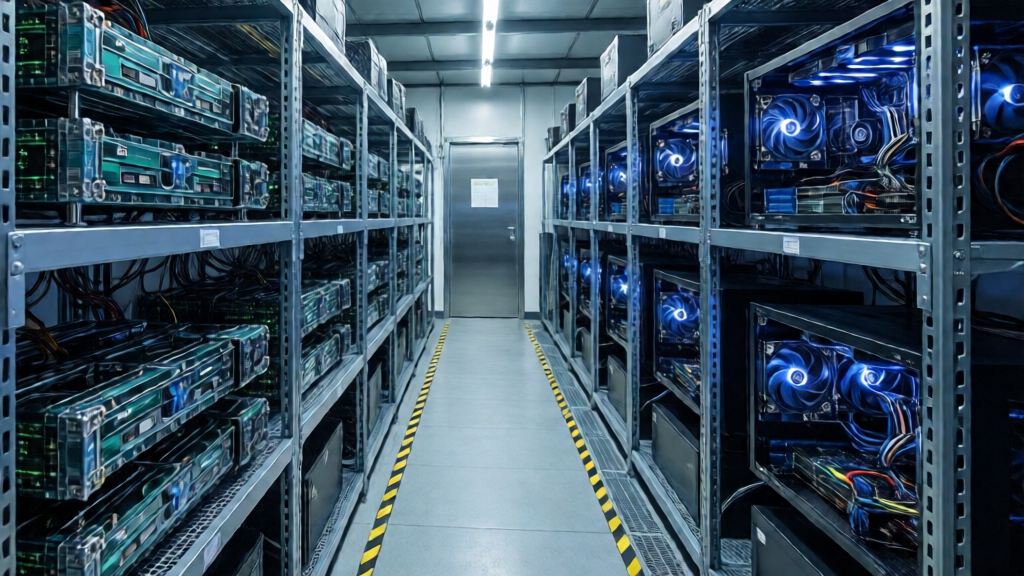
GPUs significantly improved mining efficiency and are still widely used today for various cryptocurrencies, especially altcoins. They are cheaper than ASICs and can be used in a multi-setup for increased hashing power. GPU mining often appeals to smaller miners who want to experiment with mining without spending a fortune on specialized hardware.
3. Application-Specific Integrated Circuits (ASICs)
ASIC miners are custom-designed for the sole purpose of mining. They offer the highest efficiency and hashing power, making them the gold standard for Bitcoin mining. However, their high cost may deter newcomers. The use of ASICs continues to grow as manufacturers develop more advanced models to stay competitive in the mining space.
4. Field Programmable Gate Arrays (FPGAs)
FPGAs offer a balance between GPUs and ASICs. They can be reprogrammed to mine different cryptocurrencies, making them versatile options for miners. However, they require technical expertise to set up and manage effectively.
How to Choose the Right Mining Hardware
Choosing the right mining hardware can be overwhelming, but by considering several factors, you can make an informed decision. Here are some key considerations:
Mining Hardware Trends in 2025
As of 2025, several trends are influencing the mining hardware landscape:
1. Increased Focus on Energy Efficiency
With rising energy costs and environmental concerns, manufacturers are focused on creating more energy-efficient mining hardware. Mining operations are seeking solutions that minimize their carbon footprint while maximizing outputs.
2. Emergence of Cloud Mining Services
Cloud mining allows users to rent mining power rather than invest in physical hardware, making it an attractive option for many. This trend is expected to grow as more people look for ways to enter the cryptocurrency space without the high upfront costs.
3. Development of Multi-Purpose Mining Solutions
Hardware capable of mining multiple cryptocurrencies is gaining traction. Miners want flexibility in order to adapt quickly to market changes and mine different coins as they become more profitable.
4. Integration with Decentralized Finance (DeFi)
As the DeFi space expands, mining hardware is also evolving to support various DeFi applications. Miners are increasingly looking for hardware that can integrate with smart contract platforms and facilitate seamless cryptocurrency transactions.
Mining Hardware Best Practices
To maximize the effectiveness of your mining hardware, follow these best practices:
The Future of Mining Hardware
In the coming years, we expect to see significant advancements in mining hardware technology. Innovations such as quantum computing may disrupt traditional mining practices and lead to new consensus mechanisms. Therefore, staying updated on technological advancements will be crucial for miners to maintain a competitive edge.
In conclusion, choosing the right mining hardware is key to succeeding in the cryptocurrency mining space. By understanding the different types of hardware, considering essential factors when selecting them, and adopting best practices, miners can optimize their operations and increase profitability.
For more comprehensive insights on cryptocurrency mining and blockchain technology, visit our associated article here. Remember, investing in mining hardware is a significant decision that should not be taken lightly. Always conduct thorough research, keep an eye on industry trends, and consult relevant regulators in your region.
For those in the Vietnamese market, the increasing user base for cryptocurrencies is staggering, with an annual growth rate of 30%, highlighting the demand for reliable mining hardware and practices. Be mindful of evolving industry standards, including ont-weight:bold;”>tiêu chuẩn an ninh blockchain, which will continuously shape the landscape of cryptocurrency.
For further information and insights, feel free to explore additional resources from btctokenio.