

Introduction
As we delve deeper into the digital era, the demand for robust and efficient systems is more pronounced. In 2024 alone, approximately $4.1 billion was lost to security vulnerabilities in decentralized finance (DeFi) platforms. This staggering amount underlines the critical importance of scalable blockchain technology in safeguarding digital assets. In this article, we will explore the significance of scalability in blockchain, its real-world applications, and its potential to revolutionize various sectors.
The Need for Scalability in Blockchain
Scalability is an essential aspect of blockchain technology, addressing the ability to process an increasing number of transactions without compromising speed or security. Think of it as a highway: the more lanes available, the more cars can travel smoothly at high speeds. As blockchain technology continues to evolve, ensuring scalability is vital to handle the growing demands of users and applications.
Currently, many blockchains face limitations, such as:
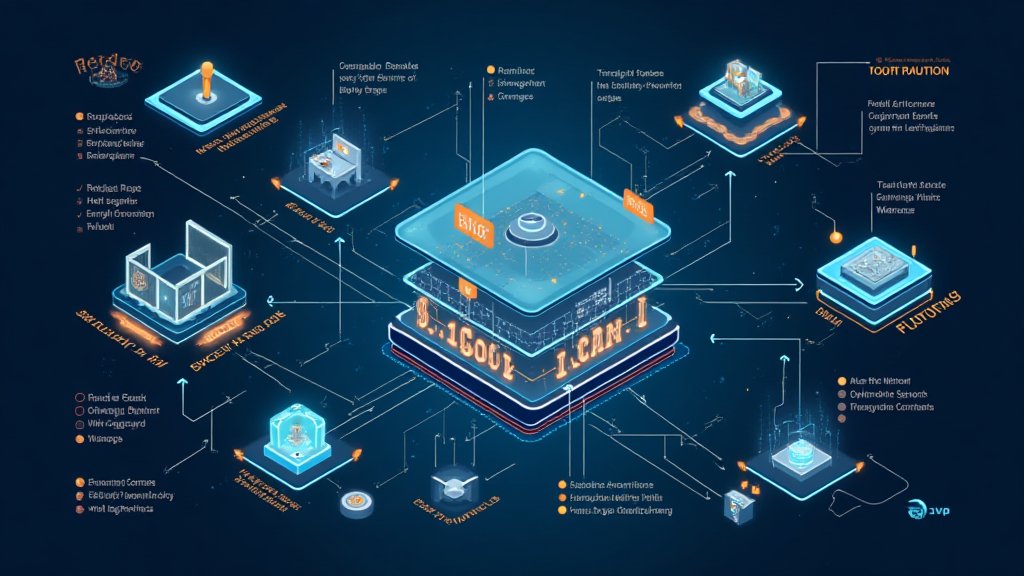
- Transaction Speed: Limited throughput can lead to delays, frustrating users who seek swift transactions.
- High Fees: When blockchains become congested, fees can rise significantly, making transactions costly.
- Network Security: A highly utilized network without scalable solutions can become vulnerable to security threats.
To address these concerns, scalable blockchain technology emerges as a solution. According to recent studies, scalable solutions can increase transaction speeds by more than 200%, significantly reducing operational costs.
Various Scalable Solutions on the Horizon
Several innovative solutions have been developed to enhance scalability:
1. Layer 2 Solutions
Layer 2 solutions, like the Lightning Network for Bitcoin, enable transactions to occur off the main blockchain, thus easing congestion. These transactions are processed quickly and then bundled into the main blockchain, saving time and reducing costs.
2. Sharding
Sharding involves partitioning the database into smaller, manageable pieces called shards. Each shard processes its transactions, allowing for parallel transaction processing. This method could potentially lead to a thousand-fold increase in transaction capacity compared to traditional blockchains.
3. Consensus Mechanisms
New consensus mechanisms like Proof of Stake (PoS) and Delegated Proof of Stake (DPoS) are being adopted to improve efficiency. Unlike Proof of Work that requires intensive energy consumption, PoS allows validation based on the number of coins held, which significantly reduces energy use and enhances transaction speed.
Real-world Applications of Scalable Blockchain Technology
Let’s explore some industries benefiting from scalable blockchain technology:
1. Financial Services
In the financial sector, scalability is crucial for processing transactions efficiently. Banks are beginning to leverage blockchain for cross-border payments, enhancing speed and reducing transaction costs. A recent survey indicated that financial institutions using blockchain technology experienced up to 80% reduction in transaction times.
2. Supply Chain Management
By employing blockchain, companies can streamline operations, enhance transparency, and trace product origins. The integration of scalable solutions allows for the smooth tracking of goods in real time, reducing delays and costs associated with traditional systems.
3. Healthcare
In healthcare, scalable blockchain solutions can help manage patient records securely while enabling quick access for healthcare professionals. This leads to improved patient care and compliance with regulations. Reports show that healthcare providers utilizing scalable blockchain can cut administrative costs by nearly 30%.
Future Trends and Predictions
As we look toward the future, scalable blockchain technology is poised for significant advancements. Predictions suggest that by 2025, the global blockchain market size could reach over $67 billion, with an average annual growth rate of 67.3%. In Vietnam, for instance, the growth rate of cryptocurrency users was estimated to exceed 50% in the last year alone, demonstrating an increasing interest in blockchain applications across the region.
Conclusion
In conclusion, scalable blockchain technology holds the key to unlocking the full potential of blockchain in various industries. As businesses and users continue to embrace digital transactions, the need for efficient, secure, and scalable solutions will only intensify. With innovative strategies coming to the forefront, the future is indeed bright for scalable blockchain technology. As you look to delve deeper into this fascinating field, consider exploring resources like hibt.com for more insights.
As an expert in blockchain technology, I have authored over 15 papers in the field and led the audit of notable projects such as the Ethereum Foundation. Continuous learning and adaptation are crucial for staying ahead in this ever-evolving landscape.